ADAP Advocacy Reveals Troubling Trends in 340B Drug Pricing Program
November 25th, 2024 8:00 AM
By: Newsworthy Staff
New infographics from ADAP Advocacy expose declining hospital charity care and rising medical debt despite increased revenue and CEO pay under the 340B program, raising concerns about its effectiveness for patients with chronic illnesses.
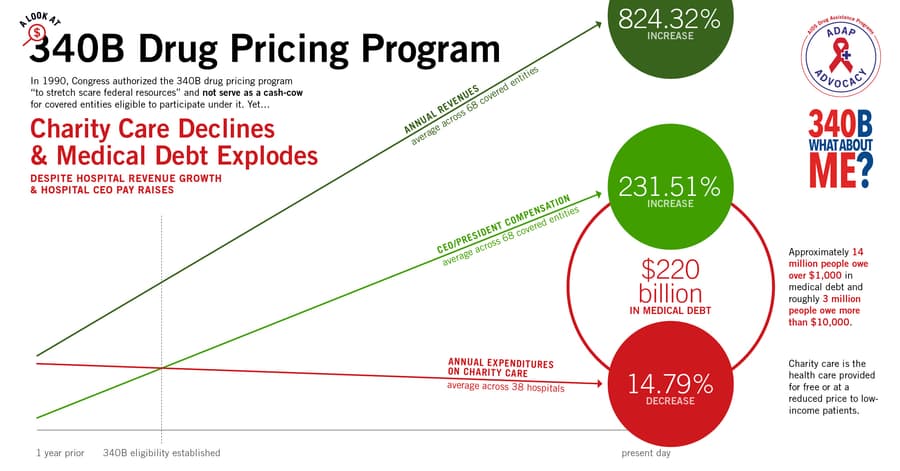
ADAP Advocacy has released a series of infographics shedding light on concerning trends within the 340B Drug Pricing Program, a federal initiative designed to help vulnerable patients access affordable medications. The newly published materials reveal a startling disconnect between the program's intended benefits and the financial realities faced by patients and hospitals participating in the system.
The infographics, made available through ADAP Advocacy's 340B Project, illustrate a troubling pattern: as hospital revenues grow and executive compensation increases, charity care provided by these institutions is on the decline. Simultaneously, patients are grappling with mounting medical debt, a trend that seems at odds with the 340B program's goals of improving healthcare accessibility and affordability.
This revelation comes at a critical time when the healthcare industry is under scrutiny for its handling of patient care and financial practices. The 340B program, established in 1992, was intended to allow covered entities to stretch scarce federal resources and provide more comprehensive services. However, the data presented by ADAP Advocacy suggests that the benefits may not be reaching patients as intended.
Of particular concern is the impact on individuals living with chronic illnesses and rare diseases. The Ryan White Grantee 340B Patient Advisory Committee, sponsored by ADAP Advocacy, has increasingly turned its attention to the issue of medical debt and its effects on this vulnerable population. The committee's focus underscores the urgency of addressing the disparities highlighted in the infographic series.
The publication of these infographics is likely to spark debate among policymakers, healthcare providers, and patient advocacy groups. It raises questions about the effectiveness of the 340B program in its current form and may prompt calls for greater oversight or reform to ensure that the program's benefits are more directly channeled to patients in need.
For the healthcare industry, these findings present a challenge to reconcile the growth in revenue and executive compensation with the apparent decline in charitable services. Hospitals and other covered entities may face increased pressure to demonstrate how they are using 340B savings to benefit patients and communities, as originally intended by the program.
Patients and consumer advocates are likely to view this information as a call to action, potentially leading to demands for greater transparency in how 340B savings are utilized and for measures to address the rising tide of medical debt. The infographics could serve as a catalyst for broader discussions about healthcare affordability and access in the United States.
As stakeholders digest the implications of ADAP Advocacy's findings, the healthcare community may need to brace for potential policy changes or increased scrutiny of 340B program participation. The infographic series serves not only as an informational tool but also as a potential turning point in the ongoing dialogue about healthcare equity and the responsibilities of institutions benefiting from federal programs.
The release of this infographic series marks an important moment in the ongoing evaluation of the 340B Drug Pricing Program. By highlighting the discrepancies between program intent and current outcomes, ADAP Advocacy has initiated what may become a significant re-examination of how healthcare institutions balance financial growth with their mission to serve vulnerable populations. As the conversation unfolds, all eyes will be on how policymakers, healthcare providers, and patient advocates respond to these revelations and what changes, if any, will be implemented to address the concerns raised.
Source Statement
This news article relied primarily on a press release disributed by 24-7 Press Release. You can read the source press release here,