AES Corporation Faces Limited Upside Despite $38 Billion Acquisition Interest from BlackRock's GIP
October 3rd, 2025 6:30 PM
By: Newsworthy Staff
The AES Corporation's stock surge following reports of a potential $38 billion acquisition by Global Infrastructure Partners, now part of BlackRock, leaves little room for additional gains as the company already trades near the rumored acquisition value despite its heavy debt load and operational challenges.
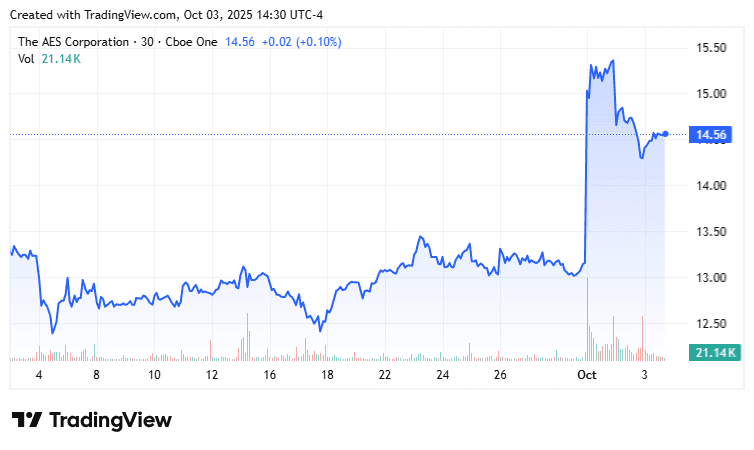
The AES Corporation has experienced a significant stock price increase following reports that Global Infrastructure Partners, now part of BlackRock, is preparing a $38 billion acquisition offer. This development has erased months of weakness that had plagued renewables-related stocks, but investors now face the question of whether this rally represents sustainable value or merely speculative enthusiasm. AES has long stood apart from traditional utilities, deriving most of its revenue from non-regulated operations that create more volatile cash flows and have historically made the stock less attractive to risk-averse investors.
The company's substantial debt burden—exceeding $30 billion as of the second quarter of 2025—has consistently suppressed its valuation even during periods when renewable energy stocks were in favor. Investors who purchased shares at $10 earlier this year have already realized gains exceeding 50% within just a few months. With the recent surge, AES now trades near the rumored acquisition value, leaving minimal opportunity for speculators hoping to capitalize on additional deal premium. The strategic rationale for the takeover appears sound, as Global Infrastructure Partners specializes in owning and optimizing infrastructure assets, and AES's portfolio of subsidiaries offers both scale and operational flexibility.
The structure of non-recourse debt at the subsidiary level allows for risk containment, while potential asset sales could help streamline the organizational framework. GIP brings substantial experience in portfolio restructuring, and AES's diverse global asset mix would likely generate more value under infrastructure consolidation than as a standalone public entity. Importantly, ownership by a deep-pocketed financial sponsor would likely reduce financing costs, improve credit terms, and provide operational flexibility that has proven challenging for AES under public market scrutiny. However, current valuation metrics suggest limited additional upside, with AES's enterprise value standing at approximately $39.9 billion at yesterday's close, already exceeding the reported $38 billion acquisition price.
This pricing dynamic indicates that market participants have not only factored in the potential deal but possibly even additional value increments, leaving minimal room for new investors. The company trades at an EV/EBITDA multiple generally consistent with industry peers, despite carrying higher leverage, greater non-regulated exposure, and increased jurisdictional risk. For income-focused investors, the dividend has represented a key attraction, with 2024 payouts to common shareholders approaching half a billion dollars, plus additional distributions to non-controlling interests. Under GIP ownership, this cash flow would likely be reduced to free capital for debt management and strategic repositioning, potentially benefiting long-term stability but eliminating current dividend expectations for shareholders.
The regulatory landscape presents additional considerations, as AES's global footprint reduces risk from any single jurisdiction blocking the transaction, though U.S. regulators have demonstrated increased scrutiny of large infrastructure acquisitions. While the diversified portfolio should facilitate approval processes, regulatory review remains a factor for investor consideration. Internal resistance from AES management cannot be entirely dismissed, given that consolidation might render certain leadership positions redundant, though fiduciary responsibilities and attractive personal incentives could ease transition challenges. For traders evaluating derivative strategies, the post-announcement price movement offers limited attractive opportunities, with reduced volatility diminishing put selling premiums and the sharp rally making call purchases unappealing.
Even deep out-of-the-money contracts appear to offer poor risk-reward profiles given the low probability of AES being valued significantly above the reported $38 billion threshold. The current situation reflects less about operational improvement or growth potential and more about deal mechanics, with the company having potentially found its strategic owner in GIP, which appears well-positioned to extract value from the extensive asset portfolio. Public market investors anticipating further appreciation may face disappointment, as the stock already trades near whispered acquisition values and most accessible gains have likely been realized. For those who benefited from the upward movement since February lows, this may represent an opportune moment to secure profits rather than pursue additional upside.
Source Statement
This news article relied primarily on a press release disributed by citybiz. You can read the source press release here,