AI Breakthrough Enhances GNSS Accuracy in Urban Environments
December 24th, 2024 8:00 AM
By: Newsworthy Staff
Researchers have developed an AI-powered method to identify and mitigate Non-Line-of-Sight errors in urban GNSS navigation, promising significant improvements in positioning accuracy for smart cities and autonomous vehicles.
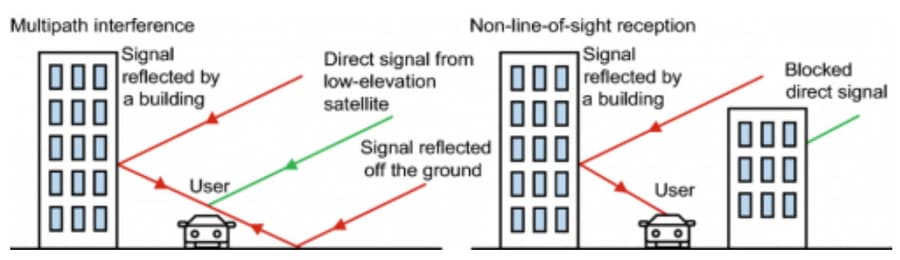
In a significant advancement for urban navigation technology, researchers have unveiled a new artificial intelligence (AI) method to tackle a persistent challenge in Global Navigation Satellite Systems (GNSS): Non-Line-of-Sight (NLOS) errors. This innovative approach, utilizing the Light Gradient Boosting Machine (LightGBM), promises to dramatically improve the accuracy and reliability of GNSS-based positioning systems in urban environments.
The research, published in Satellite Navigation on November 22, 2024, addresses a critical issue in urban GNSS navigation. In cities, tall buildings and other structures often obstruct satellite signals, leading to NLOS errors that can significantly compromise positioning accuracy. This problem has long been a roadblock for technologies relying on precise location data, such as autonomous vehicles and smart city infrastructure.
The team, comprising researchers from Wuhan University, Southeast University, and Baidu, developed a method that analyzes multiple GNSS signal features to accurately identify and differentiate NLOS errors. Their approach involves using a fisheye camera to label GNSS signals as either Line-of-Sight (LOS) or NLOS based on satellite visibility. The LightGBM model then processes various signal characteristics, including signal-to-noise ratio, elevation angle, and pseudorange consistency, to distinguish between LOS and NLOS signals with an impressive 92% accuracy.
Dr. Xiaohong Zhang, the lead researcher, emphasized the significance of this development: "This method represents a major leap forward in enhancing GNSS positioning in urban environments. By using machine learning to analyze multiple signal features, we've shown that excluding NLOS signals can significantly boost the accuracy and reliability of satellite-based navigation systems."
The implications of this research are far-reaching. For the autonomous vehicle industry, improved GNSS accuracy could enhance navigation safety and efficiency, potentially accelerating the widespread adoption of self-driving cars. In the realm of smart cities, more precise positioning data could lead to better urban planning, improved traffic management, and more efficient public transportation systems.
Moreover, this advancement could benefit a wide range of industries that rely on accurate geolocation data. Drone delivery services, for instance, could operate more reliably in urban areas. Emergency services could respond more quickly and accurately to calls in dense city environments. Even augmented reality applications, which often struggle with precise positioning in urban settings, could see significant improvements.
The research team validated their method through dynamic real-world experiments conducted in Wuhan, China, demonstrating its effectiveness in challenging urban environments. Compared to traditional methods like XGBoost, the LightGBM approach showed superior performance in both accuracy and computational efficiency.
As cities continue to grow and become more technologically integrated, the demand for precise navigation in urban environments is only expected to increase. This AI-driven solution to NLOS errors represents a crucial step forward in meeting that demand. By enhancing the reliability of GNSS systems in cities, this research paves the way for more advanced, efficient, and safer urban technologies.
The potential impact of this development extends beyond immediate technological applications. More accurate urban navigation could contribute to reduced traffic congestion, lower emissions from vehicles spending less time searching for locations, and improved overall quality of life in cities. As smart city initiatives gain momentum worldwide, innovations like this AI-powered GNSS error detection method will play a vital role in shaping the urban landscapes of the future.
As this technology moves from research to practical application, it will be interesting to see how quickly it can be integrated into existing GNSS systems and devices. The success of this implementation could mark a significant milestone in urban navigation technology, bringing us one step closer to the fully connected, efficiently navigable smart cities of tomorrow.
Source Statement
This news article relied primarily on a press release disributed by 24-7 Press Release. You can read the source press release here,