Industrial Robots Show Promise in Reducing Manufacturing Export Emissions, Study Finds
December 24th, 2024 8:00 AM
By: Newsworthy Staff
A new study reveals that industrial robots can significantly reduce CO2 emissions in manufacturing exports, but their long-term effectiveness depends on integration with broader sustainable practices and policies.
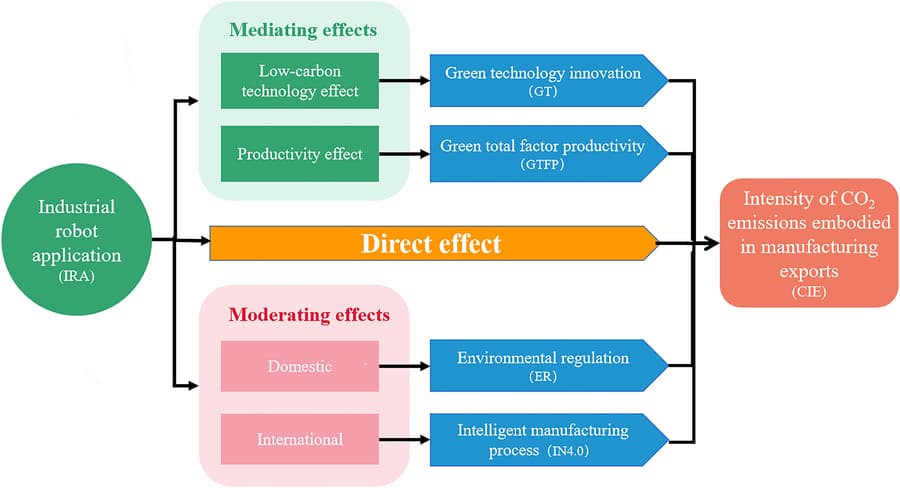
A groundbreaking study published in Data Science and Management on October 5, 2024, has shed light on the potential of industrial robots to reduce carbon emissions associated with manufacturing exports. The research, conducted by scholars from Jiangsu University and Shaoxing University, analyzed data from 37 countries over two decades, offering crucial insights into the role of automation in promoting sustainable manufacturing practices.
The study's findings reveal a significant reduction in CO2 emissions embodied in manufacturing exports (CIE) due to the application of industrial robots (IRA). This discovery underscores the potential of robotic automation to lower the carbon intensity of exported goods, a critical factor in addressing the environmental impact of global trade. However, the research also identified a U-shaped relationship between robot adoption and emissions, indicating that while initial reductions are substantial, there is a point at which the benefits plateau.
Dr. Xiaoli Wu, the corresponding author of the study, emphasized the importance of these findings, stating, "Integrating industrial robots into manufacturing processes is not just a technological upgrade—it's a crucial step towards realizing global sustainability goals." The research highlights that the effectiveness of industrial robots in reducing CO2 emissions is influenced by advancements in low-carbon technologies, productivity improvements, and the presence of robust environmental regulations.
The impact of industrial robots on emissions varies across different sectors, with medium-tech industries experiencing the most notable reductions. This variation suggests that targeted implementation of automation technologies could yield the most significant environmental benefits in specific manufacturing areas. The study's nuanced findings emphasize that while automation presents opportunities for greener trade, careful management and a focus on policy alignment are essential for achieving lasting environmental benefits.
For policymakers and industry leaders, the implications of this research are significant. The study underscores the need for policies that support the development and adoption of industrial robots while also fostering green technological innovation. It suggests that incorporating smart manufacturing practices—such as integrating low-carbon technologies and adhering to stringent environmental standards—can maximize the emission-reduction potential of industrial robots.
The research comes at a critical time as nations worldwide grapple with the challenges of reducing greenhouse gas emissions while maintaining economic growth. The findings offer a potential pathway for countries to balance industrial development with environmental sustainability, particularly in the context of export-oriented manufacturing. By promoting strategies that combine automation with green technologies and strict environmental policies, manufacturers can drive down emissions and contribute to a more sustainable global trade landscape.
As the world continues to seek solutions to climate change, this study provides valuable insights into how technological advancements can be harnessed to address environmental challenges. The research not only highlights the potential of industrial robots in reducing carbon emissions but also emphasizes the importance of a holistic approach to sustainability in manufacturing. By aligning technological innovation with environmental goals, the manufacturing sector can play a crucial role in the global effort to combat climate change and create a more sustainable future for international trade.
Source Statement
This news article relied primarily on a press release disributed by 24-7 Press Release. You can read the source press release here,