ITS Logistics August Index Highlights Export Challenges and Trucker Financial Strain Amid Tariff Negotiations
August 19th, 2025 11:51 PM
By: Newsworthy Staff
The ITS Logistics August Port/Rail Ramp Index reveals ongoing export volume challenges due to tariff negotiations while inbound volumes remain strong, with escalating concerns about trucker financial health following closures of major West Coast drayage providers.
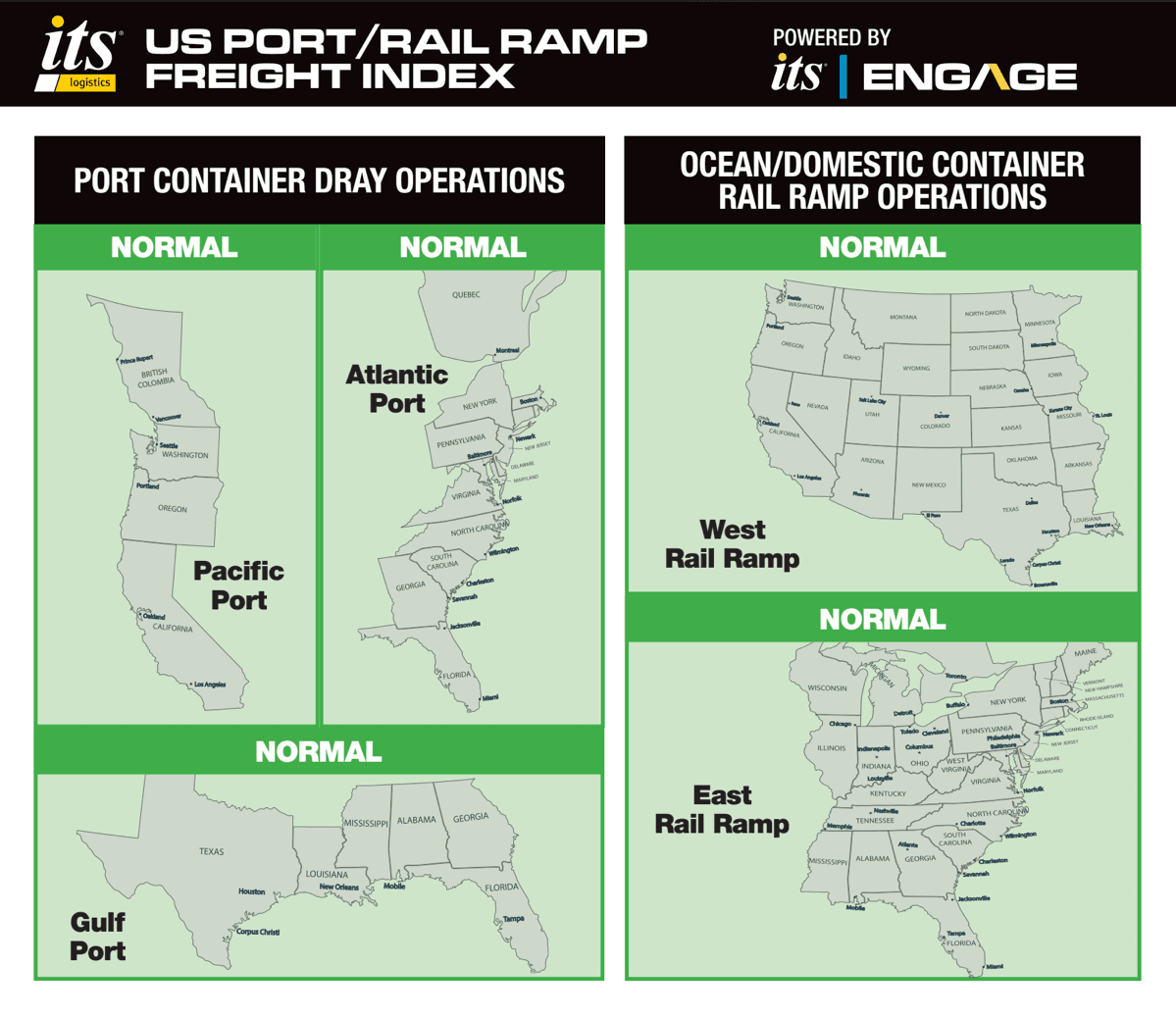
The ITS Logistics August Port/Rail Ramp Freight Index indicates export volumes continue to face challenges as tariff negotiations persist, while inbound volumes to the U.S. West Coast remain strong. Trucker financial health has emerged as an escalating concern across the industry, particularly following recent closures of major West Coast drayage providers. Paul Brashier, Vice President of Global Supply Chain for ITS Logistics, noted that industry professionals can anticipate surges in export volumes following agreements between the U.S. and other countries as shippers work to meet pent-up demand.
This anticipated increase in export activity is expected to drive up freight costs, especially in the spot market. While export volumes face ongoing challenges, inbound volumes remain robust as front-loaded goods and retail peak shipments arrive in preparation for the fourth quarter. Terminal congestion and empty container availability issues are also being reported, adding further complexity to supply chain operations. The situation reflects broader trade policy impacts, with the National Retail Federation's Global Port Tracker report confirming that import cargo volume at major container ports is forecasted to end 2025 at 5.6% below 2024's volume.
Preliminary data demonstrates the significant impact of both the current administration's trade policy and existing tariffs on the supply chain. Tariffs are increasing consumer prices, and due to fewer imports being received, businesses will eventually experience fewer goods on shelves. Small businesses are particularly vulnerable, struggling to remain open altogether. Retail sales data from July shows consumers increasing spending habits in anticipation of future price hikes and potential shortages, with total retail sales excluding automobiles and gasoline up 1.45% seasonally adjusted month over month and up 5.89% unadjusted year over year compared to June.
The Port of Los Angeles handled 892,340 Twenty-Foot Equivalent Units of cargo in June 2025, representing 8% more than last year and making it the busiest June in the port's 117-year history. June loaded imports amounted to 470,459 TEUs (10% more than 2024) and loaded exports reached 126,144 TEUs (a 3% improvement from 2024). A total of 295,746 empty container units were processed, a 7% increase over last year. Brashier anticipates volumes should subside as September approaches, except for infrastructure and project freight, which should increase through 2025 into 2026 due to the newly passed congressional bill.
Industry professionals are advised to pay close attention to the financial health of their trucking partners, citing recent closures of major West Coast drayage providers. Last month, both T.G.S. Logistics and GSC Logistics closed after serving shippers for nearly four decades. The two well-respected companies cited the current state of the market for their decision to end services, creating significant impacts on supply chain communities across the nation, particularly at the Port of Oakland. The ITS Logistics US Port/Rail Ramp Freight Index provides comprehensive forecasting for port container and dray operations across Pacific, Atlantic, and Gulf regions, along with ocean and domestic container rail ramp operations for both West Inland and East Inland regions.
Source Statement
This news article relied primarily on a press release disributed by citybiz. You can read the source press release here,