Mass Protest of 25,000 Follows Controversial Event Cancellation in Gyeonggi Province
November 16th, 2024 8:00 AM
By: Newsworthy Staff
A large-scale protest erupted in Gyeonggi, Korea, following the cancellation of a religious event by local authorities. The incident raises questions about religious freedom and government decision-making in sensitive geopolitical contexts.
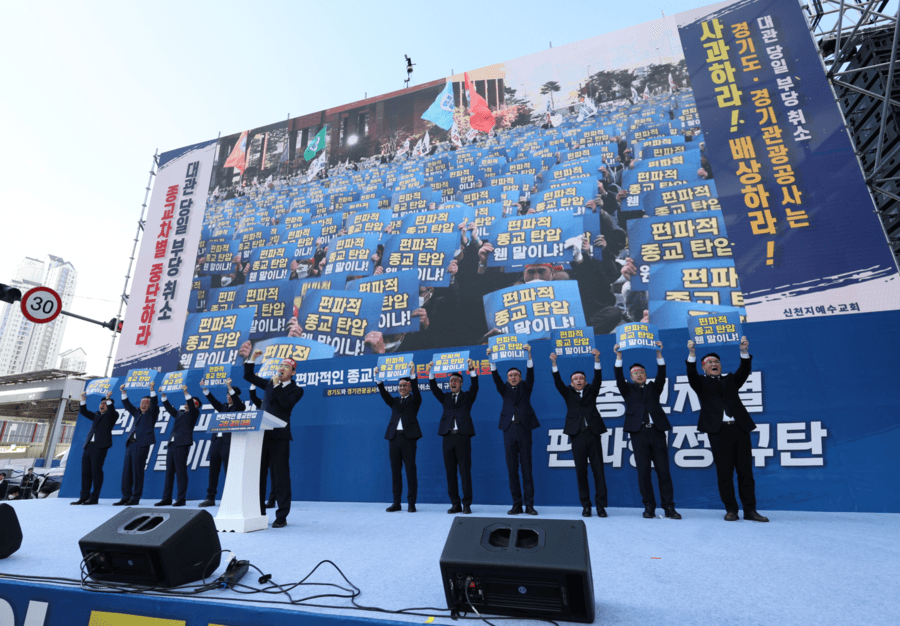
In a significant display of public dissent, approximately 25,000 people gathered near the Gyeonggi Provincial Government building to protest the cancellation of a major religious event. The demonstration, which occurred without any reported physical clashes, was sparked by the Gyeonggi Tourism Organization's decision to revoke a booking for an international religious gathering at Paju Imjingak Peace Park.
The canceled event, organized by Shincheonji Church of Jesus, was set to host 6,400 religious leaders and overseas members. The sudden cancellation, announced just one day before the scheduled date, left organizers and participants in shock. Shincheonji officials claim that a year of preparation and significant resources had already been invested in the event, including the setup of stages, seating, and equipment.
Lee Gi-won, General Secretary of Shincheonji, expressed frustration over the cancellation, stating that the organization had repeatedly sought and received assurances from authorities that the event would proceed, even after Paju was designated as a 'danger zone' due to tensions with North Korea. The church argues that the cancellation amounts to religious discrimination, as other events at the Peace Park were allowed to continue.
The Gyeonggi Tourism Organization defended its decision, citing security concerns related to the event's proximity to the North Korean border and recent escalations in inter-Korean tensions. They also pointed to specific elements of the planned event, such as aerial balloons, drones, and fireworks, as potential provocations to North Korea.
This incident highlights the delicate balance between religious freedom, public safety, and geopolitical considerations in South Korea. The massive turnout for the protest underscores the deep emotional and organizational impact of the cancellation on the Shincheonji community and raises questions about the government's handling of religious events in sensitive areas.
The protest's peaceful nature, despite its size, is noteworthy. Police presence was substantial, with 400 officers deployed to ensure safety, but no significant disturbances were reported. This orderly demonstration may serve as a model for expressing dissent while maintaining public order.
The controversy also brings attention to the broader issue of event planning and approval processes in areas near the Korean Demilitarized Zone. It raises questions about the criteria used for canceling events and the timing of such decisions, especially when international participants are involved.
As Shincheonji prepares to send an official letter to the Gyeonggi Provincial Government demanding an apology and compensation, the incident may lead to a reassessment of policies regarding large-scale events in border regions. It could also prompt discussions about improving communication between religious organizations and government bodies to prevent similar conflicts in the future.
The outcome of this dispute could have implications for religious freedom and event planning in South Korea, particularly in areas sensitive to inter-Korean relations. It may also influence how other religious and cultural organizations approach event planning in similar contexts, potentially leading to more robust contingency plans and clearer guidelines for both organizers and authorities.
Source Statement
This news article relied primarily on a press release disributed by 24-7 Press Release. You can read the source press release here,