Massachusetts Maritime Academy Student Co-Authors Significant Polar Ecosystem Research
September 25th, 2025 8:07 PM
By: Newsworthy Staff
Massachusetts Maritime Academy student McCaela Acord co-authored a peer-reviewed study published in the Journal of Phycology that examines bacterial communities in polar marine ecosystems, demonstrating undergraduate research impact on understanding climate-critical ocean processes.
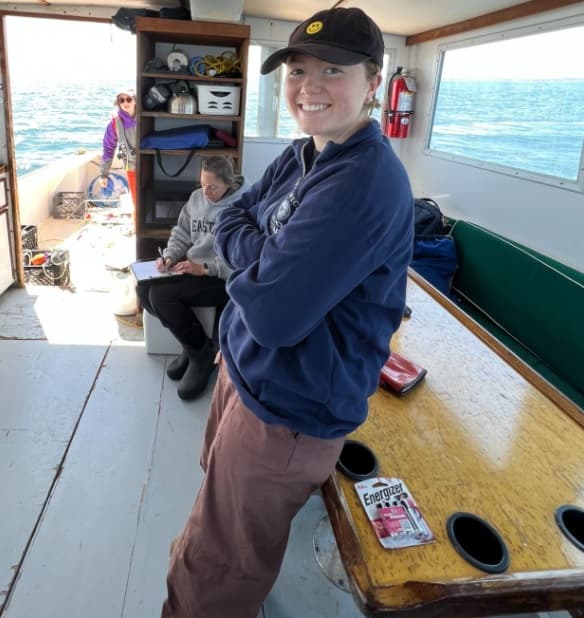
Massachusetts Maritime Academy student McCaela Acord, a senior in the Marine Science, Safety, and Environmental Protection program, has co-authored a research article published by the Phycological Society of America's Journal of Phycology. The study titled "Exploring the Phaeosphere: Characterizing the microbiomes of Phaeocystis antarctica colonies from the coastal Southern Ocean and laboratory culture" represents significant contributions to understanding polar marine ecosystems through examination of bacterial communities associated with a key phytoplankton species.
The 13-page research document explores microbiomes, known as bacterial communities, associated with Phaeocystis antarctica, which serves as a fundamental phytoplankton species in the Southern Ocean ecosystem. The research compares microbiomes found in natural colonies collected from the coastal Southern Ocean with those developing in laboratory cultures over time, providing insights into how bacterial interactions shift when removed from natural habitats. This comparative approach helps scientists understand the complex relationships between microorganisms in polar environments and how these relationships might be affected by environmental changes.
Acord contributed to the 11-author study through her work at the Woods Hole Oceanographic Institution, where she participated in research examining the complexity of polar ecosystems. Her involvement in this peer-reviewed publication demonstrates the meaningful research opportunities available to undergraduate students and their capacity to contribute to advanced scientific understanding. The research published in the Journal of Phycology available at https://doi.org/10.1111/jpy.13415 provides valuable data for scientists studying climate change impacts on marine ecosystems.
Dr. Heather Burton, MSSEP Department Chair at Massachusetts Maritime Academy, emphasized that Acord's contributions reflect the caliber of students at the institution and exemplify the power of experiential learning. The research showcases how undergraduates can significantly advance marine science through collaborative opportunities with research institutions. James McKenna, dean of Undergraduate Studies at the Academy, noted that the achievement underscores the dedication of MMA students and the valuable partnerships the academy maintains with organizations like Woods Hole Oceanographic Institution.
The study's findings have implications for understanding how climate change might affect polar marine ecosystems, particularly through alterations in microbial relationships that form the foundation of ocean food webs. Research on Phaeocystis antarctica and its associated microbiomes contributes to broader scientific efforts to predict how polar ecosystems will respond to environmental changes, making this undergraduate contribution particularly relevant to current climate science challenges.
Source Statement
This news article relied primarily on a press release disributed by citybiz. You can read the source press release here,