New Adaptive Robust Optimization Approach Enhances Hybrid Energy Storage in Microgrids
December 24th, 2024 8:00 AM
By: Newsworthy Staff
Researchers propose an innovative method to optimize hybrid hydrogen-battery energy storage systems in microgrids, potentially revolutionizing renewable energy management and reducing operational costs.
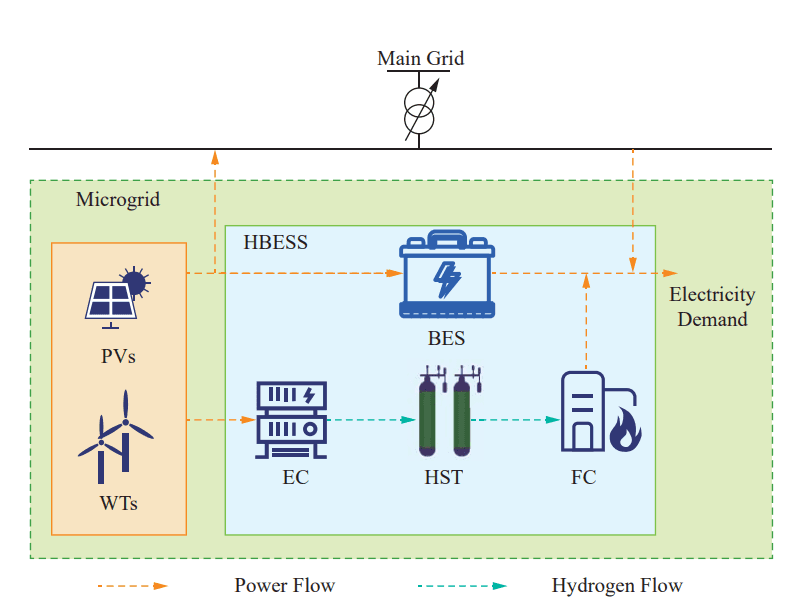
A groundbreaking study led by Professor Xu Zhao from The Hong Kong Polytechnic University introduces an adaptive robust optimization approach for hybrid hydrogen-battery energy storage systems (HBESS) in microgrids, promising significant advancements in renewable energy management and cost reduction. Published in the journal Global Energy Interconnection, this research addresses the critical challenge of optimizing energy storage and distribution in small-scale power networks.
The innovative model presented in the study aims to minimize operating costs while managing the state-of-charge (SoC) of battery storage systems. By utilizing a two-stage approach, the researchers have developed a method that can effectively handle the uncertainties inherent in microgrid operations. The day-ahead stage employs robust optimization to determine hydrogen dispatch and set SoC boundaries, while the intraday stage focuses on battery dispatch within these predefined limits.
This adaptive robust optimization method is particularly noteworthy for its ability to integrate integer recourse variables into the HBESS microgrid operation model. The researchers solved this complex problem using a novel outer-inner-CCG algorithm, demonstrating the model's efficiency, performance, and resilience through comprehensive simulations.
The implications of this research are far-reaching for the renewable energy sector. As the world increasingly shifts towards sustainable energy solutions, the efficient management of microgrids becomes crucial. This new approach could potentially lead to more stable and cost-effective renewable energy systems, particularly in areas where traditional power grids are unreliable or unavailable.
Moreover, the study's findings could have significant impacts on energy policy and infrastructure development. By optimizing the use of hybrid energy storage systems, this research contributes to the broader goal of creating more resilient and sustainable energy networks. It also addresses the critical issue of integrating various renewable energy sources and storage technologies, which is essential for the transition to a low-carbon future.
The research team's work, supported by grants from the National Natural Science Foundation of China and a PolyU research project, underscores the importance of international collaboration in addressing global energy challenges. As countries worldwide grapple with the need to reduce carbon emissions and increase energy security, innovations like this adaptive robust optimization approach could play a crucial role in shaping future energy strategies.
For the energy industry, this study opens new avenues for improving the efficiency and reliability of microgrid operations. It provides a framework for better integration of hydrogen and battery storage technologies, potentially leading to more diverse and flexible energy storage solutions. This could, in turn, accelerate the adoption of renewable energy sources by making them more economically viable and operationally stable.
As the world continues to face pressing environmental challenges, research like this becomes increasingly vital. The optimization of energy storage and distribution systems is a key component in the global effort to combat climate change and transition to sustainable energy sources. By providing a more efficient and robust method for managing hybrid energy storage systems, this study contributes significantly to the ongoing evolution of smart grid technologies and sustainable energy solutions.
Source Statement
This news article relied primarily on a press release disributed by 24-7 Press Release. You can read the source press release here,