New Book Challenges Revisionist History of War of the Worlds Broadcast
November 19th, 2024 8:00 AM
By: Newsworthy Staff
William Elliott Hazelgrove's 'Dead Air' presents evidence of widespread panic during Orson Welles' 1938 radio broadcast, contradicting recent claims that minimized its impact.
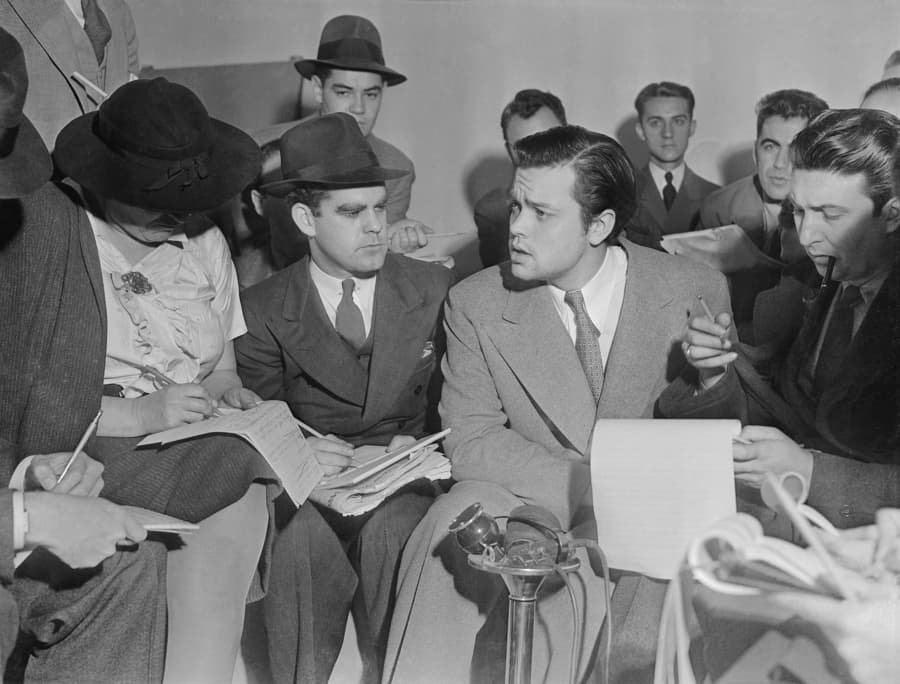
A new book released today challenges the recent revisionist history surrounding Orson Welles' infamous 1938 'War of the Worlds' radio broadcast. 'Dead Air: The Night Orson Welles Terrified America' by national bestselling author William Elliott Hazelgrove argues that the broadcast's impact was far more significant than recent accounts suggest, affecting millions of Americans and causing widespread panic.
Hazelgrove's research, based on thousands of newspaper articles from the time, paints a vivid picture of the chaos that ensued on the night of October 30, 1938. The author contends that between six to twelve million people heard the broadcast, significantly more than the less than one million claimed by some recent interpretations. The book details reports of heart attacks, suicides, people fleeing from public spaces, and numerous accidents occurring as a result of the panic.
The author's findings challenge the notion that only a small number of people were fooled by the broadcast. Hazelgrove argues that the combination of jittery pre-war nerves, trust in radio as a news medium, and the broadcast's use of a breaking news bulletin format contributed to the widespread belief in an actual Martian invasion. 'Even if people didn't hear the broadcast, panic and terror feeds on itself at a point with the story becoming more fantastic,' Hazelgrove explains.
This reexamination of the 'War of the Worlds' incident raises important questions about media influence, public trust in news sources, and the power of mass communication. In an era of 'fake news' and rapidly spreading misinformation, the lessons from this historical event remain relevant. The book's revelations about the extent of the panic could prompt a reevaluation of how we understand the relationship between media and public reaction, especially in times of crisis or uncertainty.
The publication of 'Dead Air' also highlights the ongoing fascination with this pivotal moment in broadcast history. By providing new insights into the scale and nature of the public's response, Hazelgrove's work contributes to our understanding of social psychology and mass behavior. It serves as a reminder of the potential consequences when fiction is mistaken for reality on a large scale.
Furthermore, the book's release coincides with growing concerns about the spread of misinformation through modern media channels. The parallels between the 1938 broadcast's impact and contemporary issues of viral false information could provide valuable insights for media scholars, policymakers, and the general public alike.
As 'Dead Air' hits the shelves, it promises to reignite discussions about one of the most famous media events in history. By challenging the revisionist narrative, Hazelgrove not only offers a fresh perspective on a well-known incident but also invites readers to consider the enduring power of broadcast media and the complex relationship between information, belief, and public reaction.
Source Statement
This news article relied primarily on a press release disributed by 24-7 Press Release. You can read the source press release here,