New Book on 1938 'War of the Worlds' Panic Draws Parallels to Recent UFO Sightings
December 15th, 2024 8:00 AM
By: Newsworthy Staff
William Elliott Hazelgrove's book 'Dead Air' about the 1938 Orson Welles radio broadcast gains new relevance amid recent UFO sightings in New Jersey, highlighting enduring public fascination with extraterrestrial encounters.
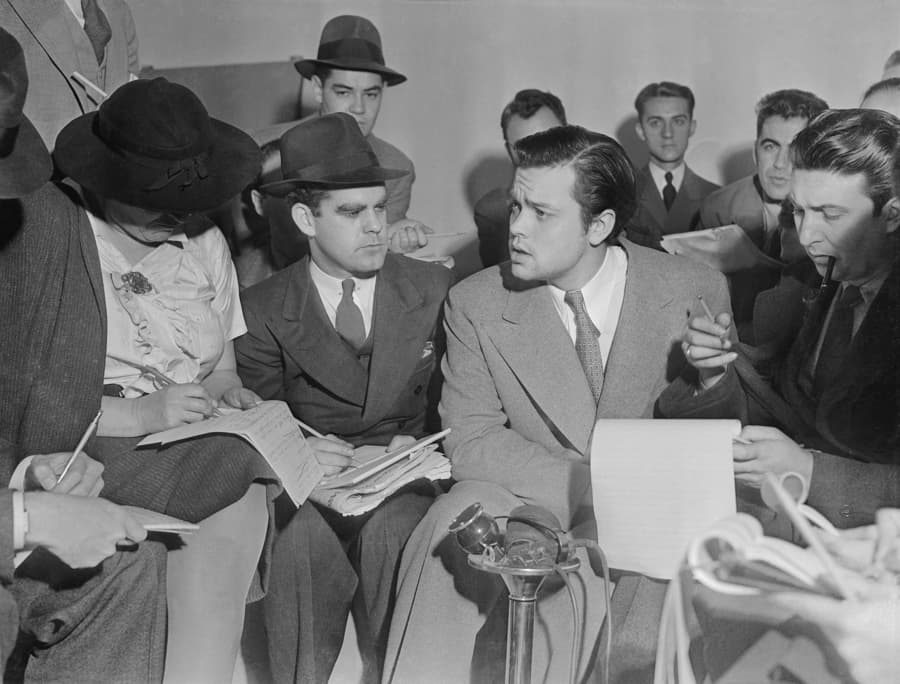
A recently published book detailing the infamous 1938 'War of the Worlds' radio broadcast has taken on unexpected relevance in light of recent UFO sightings in New Jersey. 'Dead Air: The Night Orson Welles Terrified America,' by William Elliott Hazelgrove, explores the nationwide panic sparked by Welles' dramatization of an alien invasion, drawing striking parallels to current events.
Released on November 19, 2024, by Rowman and Littlefield, 'Dead Air' has garnered critical acclaim from major publications including The Associated Press, Wall Street Journal, and Publishers Weekly. The book's timely release coincides with a series of unexplained aerial phenomena reported over New Jersey in the past week, echoing the fictional Martian landing site in the 1938 broadcast.
Hazelgrove's work meticulously recounts the events of October 30, 1938, when Orson Welles' radio adaptation of H.G. Wells' 'The War of the Worlds' convinced many listeners that an actual alien invasion was underway. The broadcast, which described Martians landing in Grover's Mill, New Jersey, and attacking humans with advanced weapons, caused widespread panic, resulting in reported deaths, heart attacks, and accidents as people fled their homes.
The author draws attention to the similarities between the 1938 incident and the current public reaction to the New Jersey UFO sightings. 'Reality is stranger than fiction,' Hazelgrove notes, pointing out that the wild speculation and theories circulating on social media today mirror the mass hysteria of the past. 'People think that kind of terror could not happen today, but look what is happening now with the wild speculation. I think it could happen again if people believe aliens had actually landed.'
The book's sudden relevance underscores the enduring public fascination with the possibility of extraterrestrial life and the potential for mass panic in the face of perceived threats. It also raises questions about the role of media, both traditional and social, in shaping public perception and reaction to unusual events.
Hazelgrove suggests that belief in aliens remains strong, both in 1938 and now, highlighting how deeply ingrained the concept of extraterrestrial life is in the public consciousness. This persistent belief, combined with the rapid spread of information and misinformation in the digital age, creates a potent environment for speculation and fear.
The parallels between the 1938 broadcast and current events serve as a reminder of the power of suggestion and the importance of critical thinking in an era of instant communication. As 'Dead Air' climbs bestseller lists, now in its third printing, it offers readers a historical perspective on mass communication, public reaction to the unknown, and the thin line between fiction and perceived reality.
The book's success and its newfound relevance prompt reflection on how society processes information about potential extraterrestrial encounters and the responsibility of media outlets in reporting on unverified phenomena. It also raises questions about the preparedness of authorities to handle public reactions to unusual events, whether real or perceived.
As the investigation into the New Jersey UFO sightings continues, Hazelgrove's 'Dead Air' provides a timely exploration of how fear, belief, and the unknown can intersect to create significant societal impacts. The book not only offers a historical account of a fascinating moment in broadcast history but also serves as a cautionary tale about the potential consequences of mass panic in the face of the extraordinary.
Source Statement
This news article relied primarily on a press release disributed by 24-7 Press Release. You can read the source press release here,