New Research Reveals Potential Breakthrough in Triple-Negative Breast Cancer Treatment
April 24th, 2025 4:00 AM
By: Newsworthy Staff
Pacylex Pharmaceuticals' experimental drug zelenirstat shows promising results in disrupting mitochondrial function in triple-negative breast cancer cells, potentially offering new insights into cancer treatment strategies.
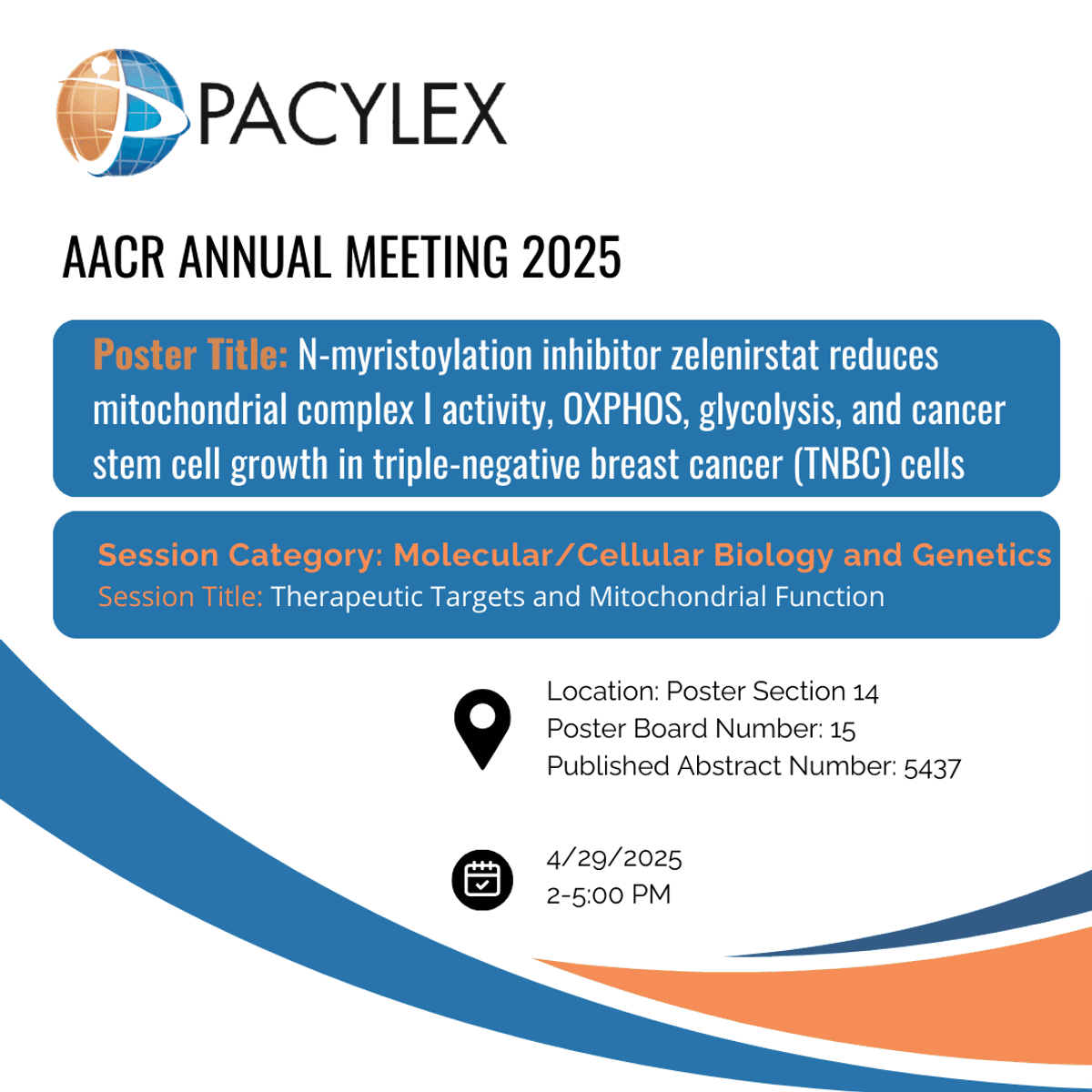
Researchers at the University of Alberta have uncovered significant evidence regarding zelenirstat, an experimental drug that demonstrates potential in targeting triple-negative breast cancer (TNBC) at the cellular level. The findings, set to be presented at the American Association for Cancer Research (AACR) Annual Meeting, highlight the drug's ability to disrupt critical metabolic processes in aggressive cancer cells.
The study reveals that zelenirstat can fundamentally interfere with mitochondrial complex I formation and oxidative phosphorylation in TNBC cells. This disruption is particularly notable because mitochondrial energy production plays a crucial role in cancer cell survival and metastasis. By targeting these cellular mechanisms, the drug shows promise in potentially limiting cancer cell growth and spread.
Dr. Luc Berthiaume, Chief Scientific Officer at Pacylex Pharmaceuticals, emphasized the significance of these findings. The research builds upon previous work demonstrating zelenirstat's effectiveness in disrupting growth signaling and energy production in acute myeloid leukemia cells, now extending those insights to solid tumor environments.
The most promising aspect of the research is zelenirstat's impact on TNBC stem cells. By reducing the growth of these particularly aggressive cellular components, the drug could potentially offer a new approach to preventing cancer metastasis and recurrence. Triple-negative breast cancer is notoriously challenging to treat, with limited targeted therapies available, making this research particularly significant.
Zelenirstat, originally developed as a N-myristoyltransferase inhibitor (NMTi), is part of Pacylex's broader strategy to develop targeted cancer therapies. The drug has already received FDA Orphan Drug and Fast Track Designations for acute myeloid leukemia, and ongoing clinical trials continue to explore its potential across different cancer types.
The research represents a critical step in understanding how targeted molecular interventions might interrupt cancer cell metabolism. By focusing on mitochondrial processes, researchers are exploring mechanisms that could potentially slow or prevent cancer progression, offering hope for more effective treatment strategies for patients with aggressive cancer forms.
Source Statement
This news article relied primarily on a press release disributed by Reportable. You can read the source press release here,