Semi Truck Blind Spots Present Critical Safety Hazard on Georgia Highways
February 16th, 2026 1:00 PM
By: Newsworthy Staff
The extensive blind spots around semi trucks, known as 'No-Zones,' create significant collision risks on Georgia's busiest interstates, and understanding these dangers along with legal recourse is crucial for driver safety.
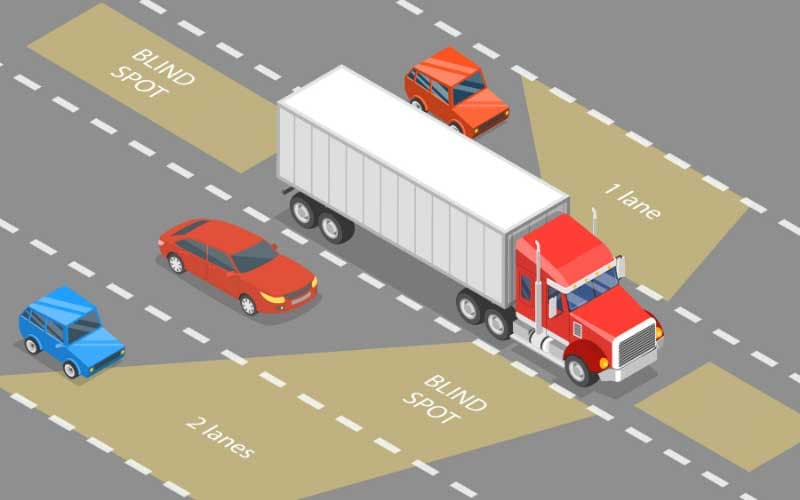
The substantial blind areas surrounding semi trucks, termed 'No-Zones' by the Federal Motor Carrier Safety Administration, represent a persistent and severe safety threat on Georgia roadways. These invisible zones, which can extend for several car lengths along each side of a trailer, roughly 20 feet in front of the cab, and nearly 200 feet behind the truck, create situations where a driver can legitimately fail to see a nearby vehicle. Attorney Charles Graham notes that the danger is compounded by the physics of a collision; a fully loaded semi weighing up to 80,000 pounds exerts devastating force on a typical passenger car during an impact.
Georgia's specific traffic patterns exacerbate the risk, particularly on high-volume corridors like I-75 through metro Atlanta, I-85 near the Perimeter, I-20, and the often-congested I-285. On these roads, common maneuvers such as lane changes, merges from short ramps, or wide right turns at intersections can place a car directly into a truck's blind spot. The right-side no-zone is especially hazardous, often covering two or three lanes and leading to right-turn squeeze crashes or lane-change impacts. The mechanics of these zones mean a compact car near the front bumper or alongside the trailer can completely disappear from a truck driver's view, seated eight to ten feet above the road.
Following a crash, determining fault can involve multiple parties, including the driver, the trucking company for potentially pushing unrealistic schedules, maintenance providers for mirror system neglect, or cargo loading companies for handling errors. Building a case requires evidence like driver logs, electronic data from the truck, inspection reports, and training histories. Georgia law imposes specific rules; under O.C.G.A. § 9‑3‑33, most personal injury claims must be filed within two years, and the state's modified comparative negligence rule bars recovery if an injured person is 50 percent or more at fault.
Insurance carriers may argue that a smaller vehicle should not have been in the no-zone, highlighting the importance of evidence such as photographs, electronic data, and witness accounts. Graham emphasizes that while drivers share responsibility for awareness, trucking companies have a duty to operate safely. The firm aims to clarify that all motorists have a right to use Georgia's highways and that safety rule violations have legal consequences. More detailed information on this topic is available in the article Semi Truck Blind Spots: A Hidden Danger on Georgia Roads. Understanding both the physical dimensions of truck no-zones and the legal framework is essential for addressing this critical highway safety issue.
Source Statement
This news article relied primarily on a press release disributed by Press Services. You can read the source press release here,