Shincheonji Church Protests Venue Cancellation, Alleging Religious Discrimination
November 15th, 2024 8:00 AM
By: Newsworthy Staff
Shincheonji Church of Jesus staged a massive protest in South Korea following the last-minute cancellation of their venue for a large international gathering, raising concerns about religious freedom and political interference in religious affairs.
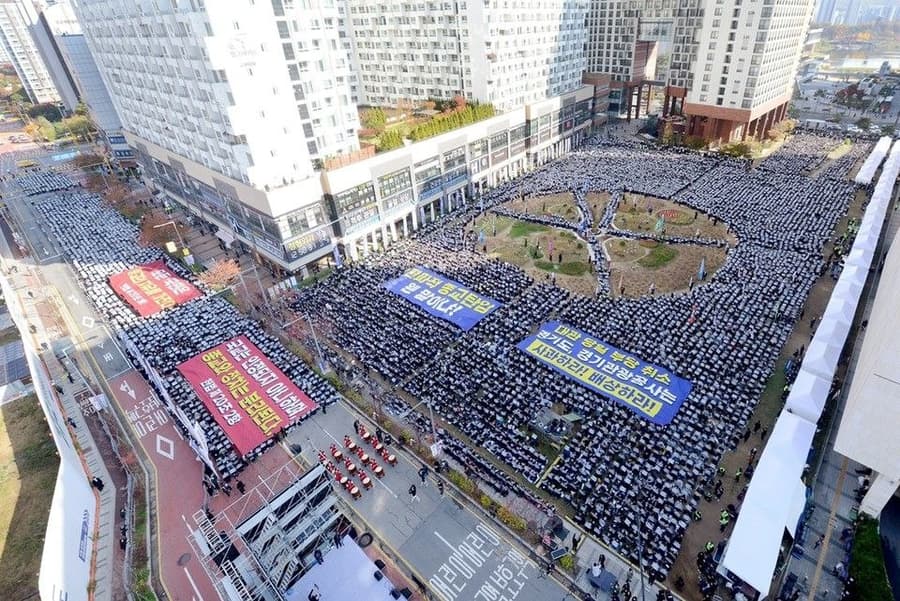
In a significant display of dissent, the Shincheonji Church of Jesus, the Temple of the Tabernacle of the Testimony, organized a large-scale protest on November 15, 2024, in front of the Gyeonggi Provincial Office in South Korea. The demonstration was prompted by the Gyeonggi Tourism Organization's abrupt cancellation of a venue that had been rented for a major international event scheduled for the same day.
The cancellation, which occurred on the day of the planned event, has sparked controversy and raised questions about religious freedom and potential discrimination. Shincheonji Church officials claim that they had followed all legal procedures and received approval for their 110,000-person graduation ceremony, originally set to take place on October 30th in Imjingak, Paju. The sudden revocation of the venue has been denounced by the church as a violation of Article 20 of South Korea's Constitution, which guarantees religious freedom.
Critics of the decision argue that the cancellation was a result of political pressure from other religious groups, highlighting concerns about the separation of church and state in South Korea. The incident has drawn attention to the broader issue of religious tensions and the treatment of minority religious organizations in the country.
The Shincheonji Church has faced significant challenges in recent years, including what they describe as severe social criticism, forced investigations, tax probes, and arrests. Church representatives allege that these actions are part of a broader campaign by political entities and traditional churches to use Shincheonji as a scapegoat for various societal issues, potentially to gain political favor and votes.
This latest incident has reignited debates about religious tolerance and the role of government in mediating religious affairs. Observers have drawn parallels between the treatment of Shincheonji Church and historical instances of religious persecution, with some likening it to medieval witch hunts. The church's protest serves as a stark reminder of the ongoing struggles faced by religious minorities and the importance of upholding constitutional protections for religious freedom.
The controversy surrounding the venue cancellation and subsequent protest highlights the delicate balance between maintaining public order and protecting religious rights. It also underscores the need for transparent and fair administrative processes when dealing with religious organizations, regardless of their size or popularity.
As South Korea continues to navigate issues of religious diversity and freedom, the Shincheonji Church's protest may serve as a catalyst for broader discussions about the relationship between religion and state. The incident raises important questions about the extent to which political considerations should influence decisions affecting religious gatherings and the potential consequences of such actions on social harmony and constitutional rights.
The outcome of this controversy could have far-reaching implications for religious freedom in South Korea and may set a precedent for how similar situations are handled in the future. It also serves as a reminder of the importance of vigilance in protecting the rights of all religious groups, regardless of their standing in society or their relationship with the political establishment.
Source Statement
This news article relied primarily on a press release disributed by 24-7 Press Release. You can read the source press release here,