Texas State Professor Develops AI Tool to Enhance Cognitive Accessibility in Interior Design
August 4th, 2026 12:00 PM
By: Newsworthy Staff
Assistant Professor Nadim Adi's research and new AI platform NuroNest aim to make interior spaces more supportive for people with dementia, highlighting the importance of cognitive accessibility in design.
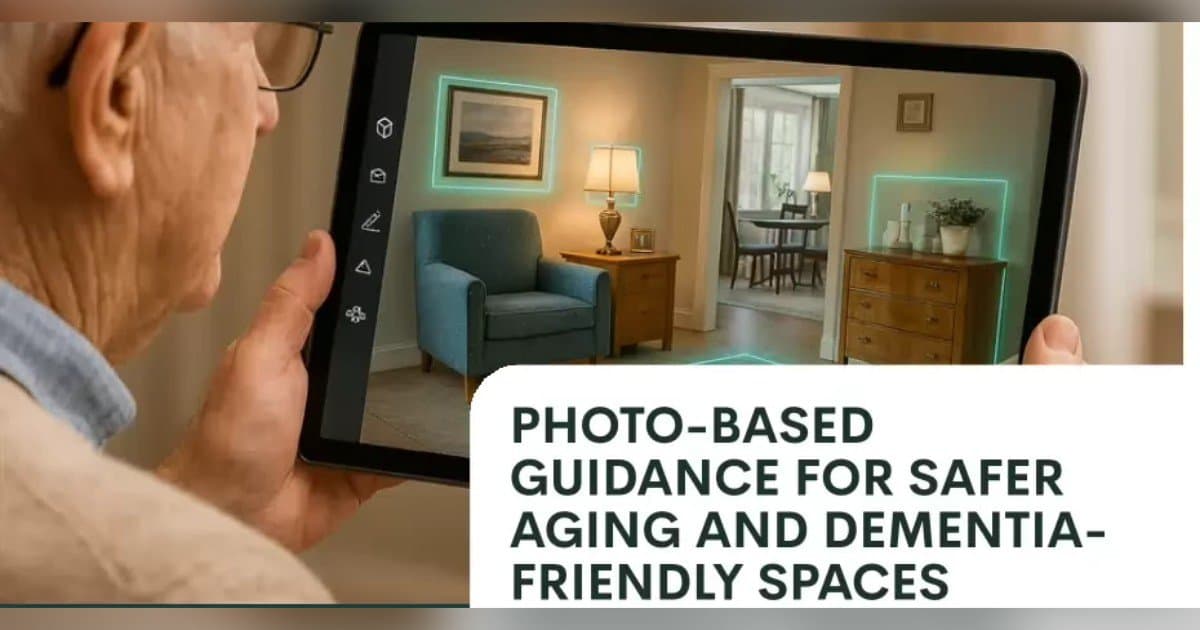
As the global population ages and the prevalence of dementia and Alzheimer's disease rises, the need for cognitive accessibility in everyday environments has become increasingly urgent. Factors such as lighting, contrast, clutter, signage, furniture placement, wayfinding, and sensory cues can either support dignity and independence or contribute to confusion, stress, and unsafe conditions. While families and care teams often focus on medication and monitoring, the physical environment is frequently overlooked as a component of care.
Assistant Professor Nadim Adi, PhD, M.Arch, B.Arch, of Texas State University's Department of Interior Design in the School of Family and Consumer Sciences, is addressing this gap through his research, a pioneering university course, and NuroNest, an early-stage AI platform designed to identify environmental risks in interior spaces. Grounded in over a decade of research in dementia-supportive design and environmental psychology, NuroNest is intended to support—not replace—designers, healthcare professionals, occupational therapists, and caregivers.
"If we design for physical accessibility, why should we not also design for cognitive accessibility?" Adi said. "Homes, clinics, senior living communities, and public spaces can unintentionally create risk when they are visually confusing, poorly lit, or hard to navigate. The built environment itself can—and should—be part of the care equation."
NuroNest is being developed as an AI-supported design assessment tool that analyzes images of interior spaces and flags features that may affect people living with dementia or aging-related cognitive changes. These features include low contrast between furniture and floors or walls, unclear pathways, visual clutter, and weak wayfinding cues. The long-term vision is to make dementia-supportive design more accessible to families, caregivers, and organizations that sense a space "doesn't feel right" but lack ready access to a specialist.
Currently in its early stages, NuroNest is being refined by Adi and his team, who are gathering feedback and exploring research validation and partnerships. The tool is meant to raise awareness and guide better conversations rather than replace professionals.
Adi's research and teaching underpin this product vision. With Dr. Mais Aljunaidy, assistant professor of psychology at Texas State, he co-authored An Introduction to Architectural Psychopathology, a textbook focused on how interior design can support people experiencing mental disorders, including dementia. The pair also developed Texas State's interdisciplinary architectural psychopathology course, offered beginning fall 2025, which trains students to design spaces that actively support individuals living with conditions such as autism, dementia, depression, schizophrenia, and anxiety disorders. The course has been covered by Texas State News, Texas Public Radio, and Community Impact.
Adi's peer-reviewed work includes a systematic study of architecture and mental disorders in HERD: Health Environments Research & Design Journal, research on using virtual reality to assess elderly and dementia-friendly hospital design, and writing on artificial intelligence and mental disorder art therapy. He has also spoken publicly on aging-ready environments, including a TEDx Texas State University talk on preparing buildings for an aging population, and hosts conversations on design and mental health through Mental Design Labs.
Dr. Adi and the NuroNest team are actively seeking research collaborators, pilot partners, and organizations—including community groups, senior living providers, healthcare organizations, dementia care advocates, researchers, designers, and technology partners—interested in validating and advancing the technology to improve environments for older adults and people living with dementia.
Source Statement
This news article relied primarily on a press release disributed by Newsworthy.ai. You can read the source press release here,