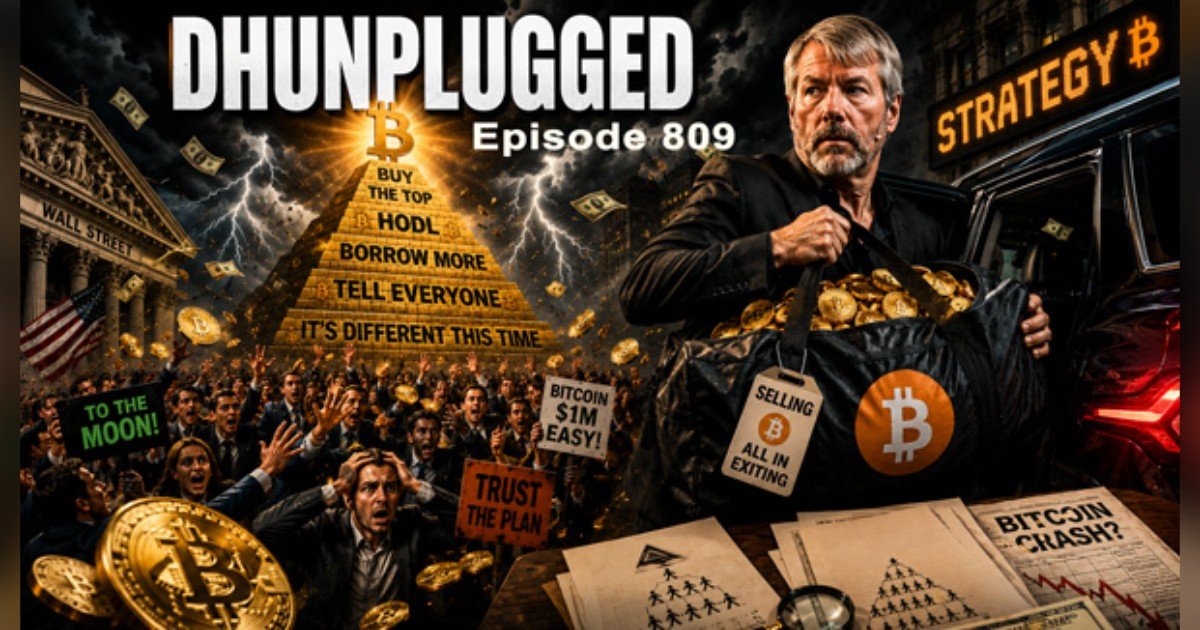
Michael Saylor Sells Bitcoin as Strategy Books $8.32B Paper Loss
On DHunplugged #809, Andrew Horowitz and John C. Dvorak dig into Michael Saylor's surprise sale of 3,588 Bitcoin, SpaceX's debut in the NASDAQ 100, a soft June jobs report, Oracle's 19% weekly plunge, and Tesla's record deliveries alongside an 8% stock drop.






Fort Lauderdale, FL (Newsworthy.ai) Wednesday Jul 8, 2026 @ 7:50 AM CDT

DH Unplugged — DHunplugged #809: He’s Selling Bitcoin!
Photo: Horowitz and Dvorak
“This is the guy that said never sell Bitcoin. He was a Treasury poster child, is now selling to serve as the capital structure. Oops.”
Episode 809 of DH Unplugged, titled He's Selling Bitcoin!, hosted by John C. Dvorak and Andrew Horowitz and published July 7, 2026, opens the second half of the year with a wobble across risk assets and a headline that would have been unthinkable a year ago: Michael Saylor's Strategy has sold Bitcoin. The hosts unpack a soft June jobs print, SpaceX's arrival in the NASDAQ 100, Oracle's steepest weekly drop since the dot-com bust, and renewed strikes on Iran, all against a market suddenly questioning the AI trade.
Listeners can expect a wide-ranging tour of the tape and the news cycle. Threads covered include:
DH Unplugged — DHunplugged #809: He’s Selling Bitcoin!
Photo: Horowitz and Dvorak
“This is the guy that said never sell Bitcoin. He was a Treasury poster child, is now selling to serve as the capital structure. Oops.”
- Strategy selling 3,588 Bitcoin for roughly $216 million while sitting on an $8.32 billion paper loss.
- SpaceX joining the NASDAQ 100 and displacing weight from Nvidia, Microsoft and other megacaps.
- A 57,000 payrolls print versus a 110,000 estimate, with April and May revised down by 74,000.
- Oracle's 19% weekly slide, $130 billion in debt, and $24 billion in negative free cash flow.
- Tesla's record 480,000 Q2 deliveries alongside an 8% share drop.
The hosts do not hide their skepticism about Strategy's pivot. Horowitz notes that proceeds from the Bitcoin sale are being used for preferred stock dividends and dollar reserves, then delivers the line of the episode:
This is the guy that said never sell Bitcoin. He was a Treasury poster child, is now selling to serve as the capital structure. Oops.
Dvorak presses on whether the structure is "Ponzi-ish," while Horowitz walks through an average purchase price of $75,476 against recent sales between $59,000 and $61,000 per coin.
The conversation broadens into the machinery behind the AI trade. The hosts flag reports that Nvidia's Kyber architecture could slip up to 12 months into 2028, note Goldman Sachs data showing hedge funds dumped tech hardware and semiconductor exposure for a fourth straight week, and question Larry Ellison's sudden speaking tour as Oracle's stock cratered. Elsewhere they cover Microsoft's latest round of roughly 4,800 layoffs pinned on AI, OPEC+ adding 188,000 barrels per day in August, the Strategic Petroleum Reserve falling to 319 million barrels (its lowest since 1983), and a China court handing a death sentence to former Nanjing official Yang Yulin over $325 million in bribes. John Williams's Shadow Stats is cited pegging alternative unemployment near 25% and inflation around 9%.
About DH Unplugged
DH Unplugged is a weekly investing and markets podcast hosted by columnist John C. Dvorak and money manager Andrew Horowitz. Casual, unrehearsed and skeptical, the show blends Federal Reserve watching, earnings analysis, commodity moves and offbeat cultural observation for investors who want the story behind the tape. New episodes are available at dhunplugged.com, via RSS, and on Apple Podcasts, Spotify, and Amazon Music. Episode 809 is available now wherever podcasts are heard.
Frequently Asked Questions
- Why is Michael Saylor's Strategy selling Bitcoin after publicly saying it never would?
- According to the hosts, Strategy sold 3,588 Bitcoin for about $216 million to fund preferred stock dividends and dollar reserves. Horowitz notes the company's average purchase price was $75,476 while recent sales occurred between $59,000 and $61,000, meaning Bitcoin is being sold at a loss to service the capital structure Saylor built around never selling.
- How is SpaceX's addition to the NASDAQ 100 affecting other megacap stocks?
- Horowitz explains that SpaceX's inclusion forces the index to displace weight from existing constituents like Nvidia and Microsoft to make room proportionally for the new whale. That means funds tracking the NASDAQ 100 must buy SpaceX and sell down the diluted names, which the hosts argue is contributing to the current selloff in semiconductor and advanced computing stocks.
- What did the June jobs report actually show?
- Nonfarm payrolls rose just 57,000 versus a 110,000 estimate, with April and May revised down by a combined 74,000 jobs. Unemployment fell from 4.3% to 4.2%, but only because the labor force shrank by more than 720,000 people. Labor force participation dropped to 61.5%, the lowest in over five years, and leisure and hospitality lost 61,000 jobs.
- Why is Oracle being called a possible canary in the coal mine?
- Oracle fell 19% last week, its steepest drop since August 2001, and is down roughly 55% from its high. The hosts point to $130 billion in debt, $24 billion in negative free cash flow, and capital expenditures that surged 162% in the latest fiscal year, all tied to AI infrastructure spending premised on customers like OpenAI showing up to fund it.
- What does Shadow Stats say about the real unemployment and inflation rates?
- Horowitz cites John Williams's Shadow Stats putting alternative unemployment near 25% using the classic methodology, and alternative inflation around 9%, roughly double the official 8% comparison Horowitz references. Williams is reportedly booked as an upcoming guest on The Disciplined Investor podcast, and the hosts note the government is again discussing reimagining the inflation calculation.
- Why are the hosts skeptical that Microsoft's layoffs are really about AI?
- Microsoft cut roughly 4,800 more workers with AI cited as the reason, but Dvorak argues large companies use AI as an excuse for bloat because admitting incompetent management sounds worse. Horowitz adds that framing layoffs as AI-driven is demotivating to remaining staff, since it effectively asks employees to build the tools designed to replace them.
Media Contact

Other Recent News for DHUnplugged Podcast
- Bessent's 'Counterfactual' Defense Draws Fire on DH Unplugged
- Bessent Declares 'I Am the House' as CPI, Oil Shock and Bond Yields Rattle Markets
- Oil Spikes, Bond Jitters and a Target Halloween Backlash Rattle September Markets
- Bessent's 'Big Bond Blunder' and 5 Dumb Finance Moves Rattling Markets
- Michael Burry Calls Another Top as Nvidia Turns Chips Into Collateral