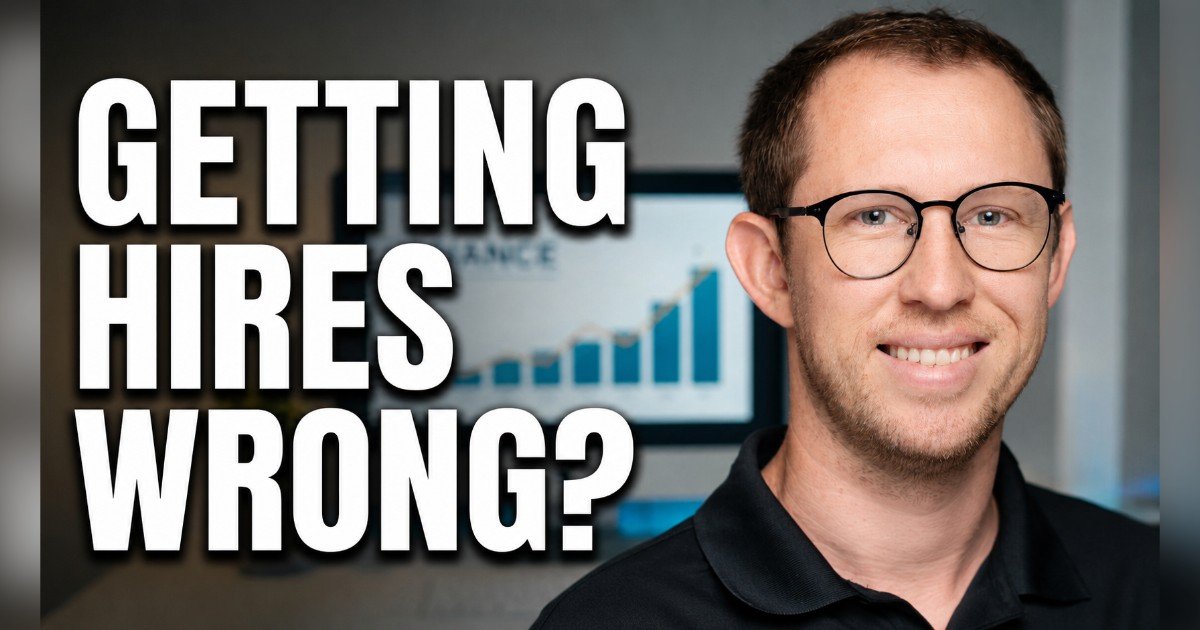
Bart Davis of 512Financial: Why Founders' First Two Hires Should Be a Controller and HR Lead
On The Building Texas Show, 512Financial founder Bart Davis unpacks the fractional CFO model, his 2-to-4 percent of revenue benchmark, the 'random number generator financial statements' trap, and why AI cannot yet replace a startup CFO.






Austin, TX (Newsworthy.ai) Wednesday Jul 22, 2026 @ 9:15 AM CDT
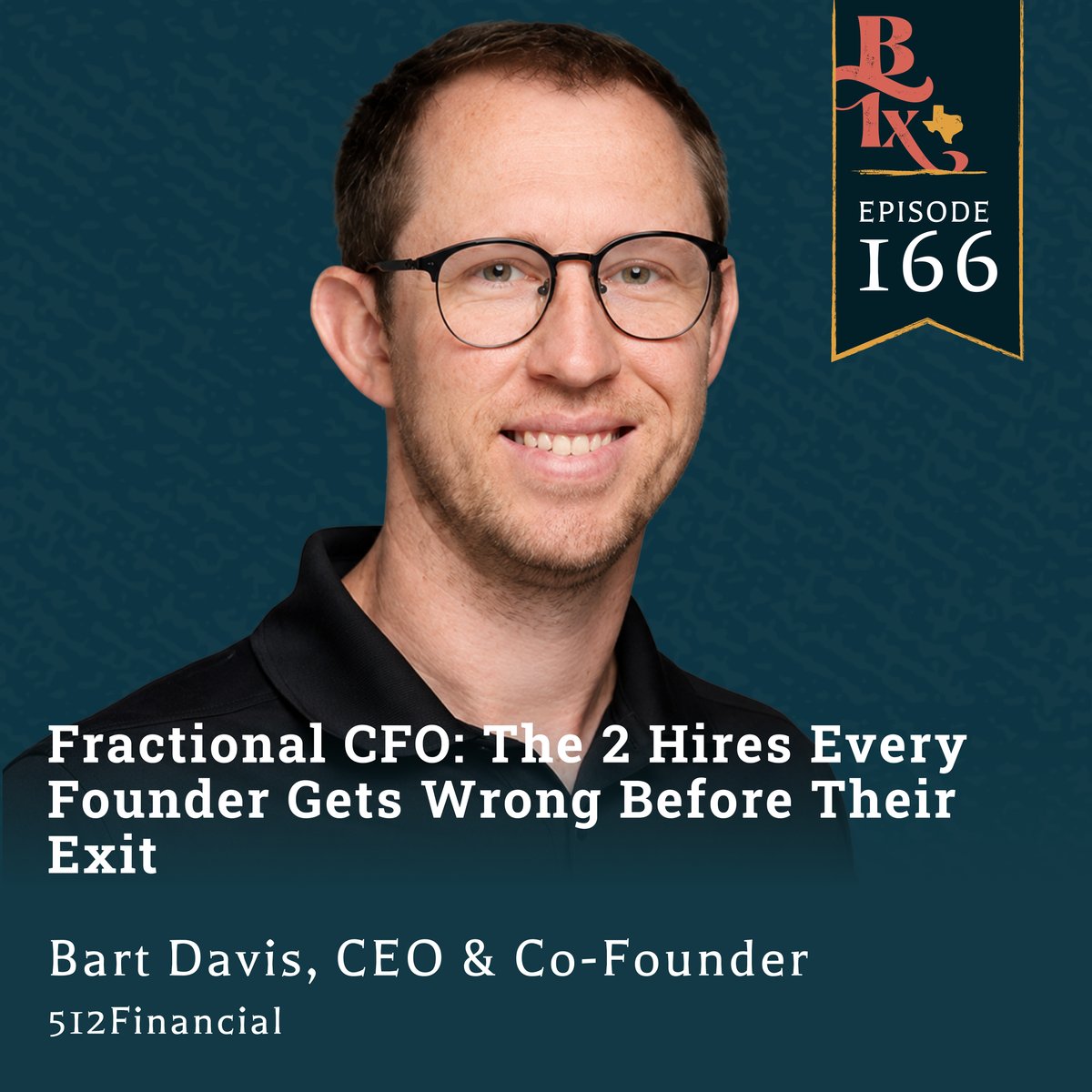
The Building Texas Show — Fractional CFO: The 2 Hires Every Founder Gets Wrong Before Their Exit | Bart Davis
Photo: Justin McKenzie
“He had been using a different outsourced accounting firm and what he referred to as the output was random number generator financial statements.”
The latest episode of The Building Texas Show, titled Fractional CFO: The 2 Hires Every Founder Gets Wrong Before Their Exit, hosted by Justin McKenzie, features Bart Davis, founder and CEO of Austin-based 512Financial. Published July 16, 2026, the conversation lands as Central Texas founders navigate tighter capital, growing compliance demands, and rising pressure to professionalize back-office operations well before an exit. Davis, who spent 2014 to 2021 running fractional finance across Joel Trammell's portfolio, argues that most Texas startups wait far too long to build the accounting, finance, and HR muscle that separates a clean exit from a broken one.
Recorded virtually the pair connected through Texas Venture Fest, the episode walks founders through the practical mechanics of fractional leadership. Threads covered include:
The Building Texas Show — Fractional CFO: The 2 Hires Every Founder Gets Wrong Before Their Exit | Bart Davis
Photo: Justin McKenzie
“He had been using a different outsourced accounting firm and what he referred to as the output was random number generator financial statements.”
- Davis's rule that healthy startups spend 2 to 4 percent of top-line revenue on the accounting and finance function.
- Why a Fortune 500 or Global 1000 CFO rarely translates to a company scaling from $1 million to $15 million in revenue.
- The 2025 acquisitions of Austin PeopleWorks and HireBetter.com, and the 'monetizing churn' thesis behind them.
- The 1099 versus W-2 risk that Davis says he sees regularly when onboarding new HR clients.
Davis is blunt about what he inherited when he first began working with Trammell's portfolio companies Packet Design and iGrafx. "He had been using a different outsourced accounting firm and what he referred to as the output was random number generator financial statements," Davis tells McKenzie, warning that founders eyeing an exit cannot repair years of bad books on the way out the door. He points to Trammell's 2018 and 2021 exits as proof that early investment in the finance function directly shaped valuation, and challenges founders to confront "the things that make it real uncomfortable at night."
The conversation goes deeper on the counterintuitive hiring order Trammell used when he first raised significant capital: a controller and an HR leader before product or go-to-market hires. Davis extends that logic to today's fractional market, arguing founders often ask for a CFO when they actually need a staff accountant at roughly 20 percent of the cost, calling the mismatch "bringing a bazooka to a knife fight." He also weighs in on AI, noting that his team uses it daily but has inherited Claude-built financial models "riddled with errors" that only a trained CFO would catch. His 80/20 framing: let humans drive the 20 percent of work that produces 80 percent of the value.
About The Building Texas Show
The Building Texas Show, hosted by Justin McKenzie, spotlights the founders, operators, and investors shaping the Texas economy from Austin and San Antonio to Houston, Dallas, and beyond. Each weekly episode surfaces the strategies, hires, and inflection points behind the state's fastest-growing companies. New episodes are available every week on YouTube, Facebook, Instagram, LinkedIn, and all major podcast platforms.
Frequently Asked Questions
- What is Bart Davis's rule for how much a startup should spend on accounting and finance?
- Davis tells McKenzie that his firm typically sees clients spending 2 to 4 percent of top-line revenue on the accounting and finance function, depending on complexity and transaction volumes. He illustrates the point with a $15 million client spending roughly $250,000 annually, noting that while the absolute number sounds large, it actually falls at the inexpensive end of his rule.
- Why does Davis argue a Fortune 500 CFO is often the wrong hire for a startup?
- Davis says there is a misconception that bigger-company pedigree equals better fit. He argues the skills required to scale a business from roughly $1 million to $5, $10, or $15 million in revenue are fundamentally different from those of a Global 1000 CFO, and that investors and operators who recognize this disparity tend to see better outcomes.
- What was the strategic thesis behind 512 Financial's acquisitions of Austin PeopleWorks and HireBetter.com?
- Davis frames both 2025 acquisitions as a way to extend customer lifecycle and 'monetize churn.' Austin PeopleWorks expanded the firm's people-ops capacity, while HireBetter's retained executive search practice lets 512 place the full-time CFOs, controllers, and HR leaders its fractional clients eventually need, rather than waving goodbye when a client outgrows the fractional model.
- Which two hires does Davis say founders typically get wrong before an exit?
- Davis points to his co-founder Joel Trammell's counterintuitive playbook: after raising significant capital, Trammell's first two hires were a controller and an HR leader, before product or go-to-market roles. Davis argues most founders reverse that order, underinvesting in the back office and creating messy books and compliance gaps that damage valuation when an exit finally arrives.
- How does Davis view AI's role in replacing CFO work?
- Davis says his team uses AI every day but has inherited Claude-built financial models 'riddled with errors' that only a trained CFO would catch. He applies an 80/20 rule: humans should do the 20 percent of work driving 80 percent of the value, while AI handles the 80 percent of work that only drives 20 percent.
- Why does 512Financial hire its fractional talent as W-2 employees rather than 1099 contractors?
- Davis says the W-2 model protects clients from misclassification risk because they engage a company rather than an individual. It also lets accountants, finance, and HR professionals focus on their craft without worrying about where their next check comes from when a client rolls off after hiring full-time internally.
Media Contact

Other Recent News for The Building Texas Show
- Beyond the Integration Tax: The idhubs Team is Rewiring the Business Operating System for the AI Era
- Fredericksburg High Students Raise $21K Launching Six Startups in INCubatoredu Debut
- From Jobsite to Pitmaster: Sloan Rinaldi's 1909 Texas BBQ Legacy
- San Marcos Buys 200 Acres to Extend Runway, Eyes Aerospace Future
- Why San Antonio Pool Buyers Are Ditching Concrete for Fiberglass