
HiringBranch Study: Scoring Soft Skills Separately Weakens Frontline Hiring Predictions
On the You Should Know podcast, HiringBranch Chief of Research and Development Assaf Bar-Moshe unpacks new research showing that evaluating empathy, acknowledgment, active listening, and reassurance together produces stronger hiring predictions than scoring each skill on its own.





Arlington, TX (Newsworthy.ai) Friday Aug 28, 2026 @ 10:00 AM EDT
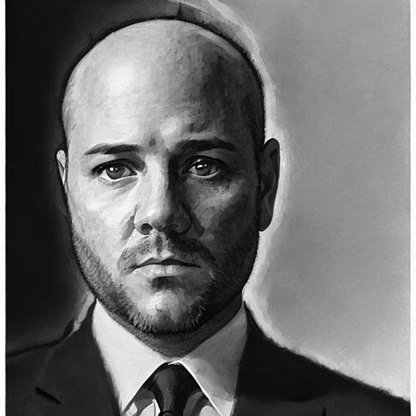
Ryan Leary
“If a candidate can express empathy, but is unable to solve the issue correctly or to comprehend the issue correctly or to reassure the customer, then this empathy is nice, but it's actually useless.”
The latest episode of You Should Know, titled Assessing Skills One at a Time Is Costing You Better Hires, published August 26, 2026 and hosted by William Tincup, features Assaf Bar-Moshe, Chief of Research and Development Officer at HiringBranch. The Montreal-based assessment company has released new research challenging a common practice in pre-hire evaluation: reporting empathy, acknowledgment, active listening, and reassurance as isolated scores. The conversation lands as employers rethink how frontline talent, from customer service reps to sales agents to retail associates, is measured against the realities of live customer interactions.
Bar-Moshe walks listeners through HiringBranch's open-ended, voice-and-writing assessment design and the study behind the headline. Key threads include:
Ryan Leary
“If a candidate can express empathy, but is unable to solve the issue correctly or to comprehend the issue correctly or to reassure the customer, then this empathy is nice, but it's actually useless.”
- Why single-skill scoring produces only moderate correlation with human annotators, while a combined proprietary model produces much stronger correlations.
- The four pillars of customer service HiringBranch measures: acknowledgment, reassurance through positive language, empathy, and active listening.
- How job descriptions are translated into conversation flows and scenario-based assessments calibrated per client, region, and role.
The discussion is grounded in specific customer-facing moments. Tincup recounts a retail confrontation over mispriced broccoli that turned on diplomacy rather than policy, while Bar-Moshe frames the research finding in plain language.
"If a candidate can express empathy, but is unable to solve the issue correctly or to comprehend the issue correctly or to reassure the customer, then this empathy is nice, but it's actually useless," Bar-Moshe said.
He adds that HiringBranch takes a linguistic rather than personality-based approach, describing the method as a "sociopragmatic analysis of the words that the candidate is actually saying."
Bar-Moshe, a trained linguist, explains that HiringBranch's team of IO psychologists and linguists uses years of textual data to build machine learning models that predict empathy, acknowledgment, and related skills, then validates those predictions against on-the-job performance months after hire. Calibrations differ by client, industry, and even geography, with regional variation across markets like Vancouver, Toronto, and Montreal shaping different scoring weights for the same role. He also previews a self-serve capability in development that would let hiring managers build assessments from a library of conversation flows and skills, reducing reliance on weak or generic job descriptions. The full study will appear under the AI research tab on the HiringBranch website.
About You Should Know
You Should Know, part of the WRKdefined Podcast Network based in Arlington, Texas, is co-hosted by Ryan Leary and William Tincup and reaches more than 3.9 million verified listeners each month. The show tackles pivotal leadership challenges, workforce dynamics, career mobility, and the impact of technology on hiring. This episode is available now wherever podcasts are heard, and at the You Should Know Podcast page.
Frequently Asked Questions
- What did HiringBranch's new research actually find about scoring soft skills?
- HiringBranch compared machine scores for individual skills like empathy and acknowledgment against human annotator ratings and found only moderate correlation when skills were scored separately. When the same skills were grouped into a proprietary machine learning model with different weights and calibrations, correlations with human annotators became much stronger, suggesting combined evaluation predicts frontline soft skills more reliably than isolated scores.
- Who is Assaf Bar-Moshe and what does HiringBranch do?
- Assaf Bar-Moshe is Chief of Research and Development Officer at HiringBranch, a Montreal-based assessment company. HiringBranch builds entirely open-ended assessments for frontline roles such as customer service, sales agents, and retail associates, placing candidates in scenarios where they respond by voice or in writing rather than choosing from multiple-choice options.
- Why does HiringBranch use a linguistic approach instead of personality testing?
- Bar-Moshe, a trained linguist, explained that HiringBranch performs a "sociopragmatic analysis of the words that the candidate is actually saying" to determine whether responses are acceptable in a given situation. This differs from personality tests because it anchors every skill, including emerging ones like integrity, grit, creativity, and adaptability, to how it is actually expressed through language on the job.
- What are the four pillars of customer service HiringBranch measures?
- HiringBranch built its customer service study around four prominent skills: acknowledging the customer's issue, reassuring the customer using positive language, empathy, and active listening. Bar-Moshe emphasized these skills do not operate in isolation, noting that empathy without the ability to comprehend and solve the issue is "nice, but it's actually useless."
- How does HiringBranch turn a job description into an assessment?
- HiringBranch translates job descriptions into conversation flows, the replicable back-and-forth patterns a candidate would handle daily, such as listening to a complaint, reiterating understanding, and offering a solution. Those flows become scenarios that elicit specific skills. When descriptions are weak, the team supplements with online research, recruiter conversations, and actual customer conversation transcripts provided by clients.
- How are assessments calibrated and validated over time?
- Calibration is client-specific and can vary by industry, role, and even geography, with different weights for markets like Vancouver, Toronto, and Montreal. HiringBranch also loops back post-hire, comparing assessment performance on quality and customer focus with actual job performance months later, and feeds those findings back into the models so assessments get smarter over time.
- What new self-serve capability did Bar-Moshe preview?
- Bar-Moshe confirmed HiringBranch is actively working on a self-serve tool that would let hiring managers build their own assessments using a library of conversation flows and skills drawn from similar roles. The goal is to help hiring managers, who often know they need to fill a job but not the job itself, start from guided templates rather than a blank screen.
Media Contact

Other Recent News for You Should Know Podcast
- ServiceNow's John Phillips: Stop Measuring AI Adoption, Measure Work Outcomes
- Oyster Founder Tony Jamous: Fear-Based Leadership Is Quietly Sinking Companies
- Paper I-9s, AI Bias and $27K Fines: Where HR Compliance Breaks in 2026
- Burning Glass Study of 12M Workers Reveals Which Employers Actually Build Careers
- isolved and Remote Partner to Bring Global Hiring Infrastructure to SMBs